
Xiaomi Fights Back: Massive Stock Buybacks and Hardware Push Amid Fierce Huawei Rivalry
The Chinese tech giant is throwing serious cash at its sliding stock. Facing mounting pressure from domestic arch-rival Huawei across both the smartphone and EV sectors, Xiaomi’s management is taking defensive measures on Wall Street while simultaneously pushing new hardware.
The Wall Street Defense
In just 48 hours, corporate executives have pumped significant capital into repurchasing their own stock, hoping to artificially stabilize the market. On Tuesday alone, the company scooped up another 7.9 million Class B shares, following a massive multi-million share buyback the day prior. A quick glance at the ticker explains the panic. Closing yesterday at 3.59 euros, the stock is hovering dangerously close to its early-March 52-week low of 3.44 euros. Factoring in recent market turbulence, Xiaomi is sitting on a steep year-to-date loss of roughly 20 percent.
The Huawei Juggernaut
While management tries to tighten the supply of shares on the open market, fundamental pressures are boiling over back home. Huawei is aggressively crowding Xiaomi’s most critical growth avenues, and they have the numbers to prove it. They are eyeing a complete takeover of the top spot in the Chinese smartphone market by 2025. Over in the automotive sector, Huawei’s HIMA platform just pushed out a staggering 589,100 vehicles, marking a 32 percent jump. Add the looming 2026 launch of their new Ascend 950 AI chip, and the technological squeeze is palpable. This relentless pace is forcing Xiaomi to burn through cash on research and development just to stay relevant in the AI and electric vehicle races, where the competition has set an incredibly high benchmark.
Shifting the Hardware Strategy
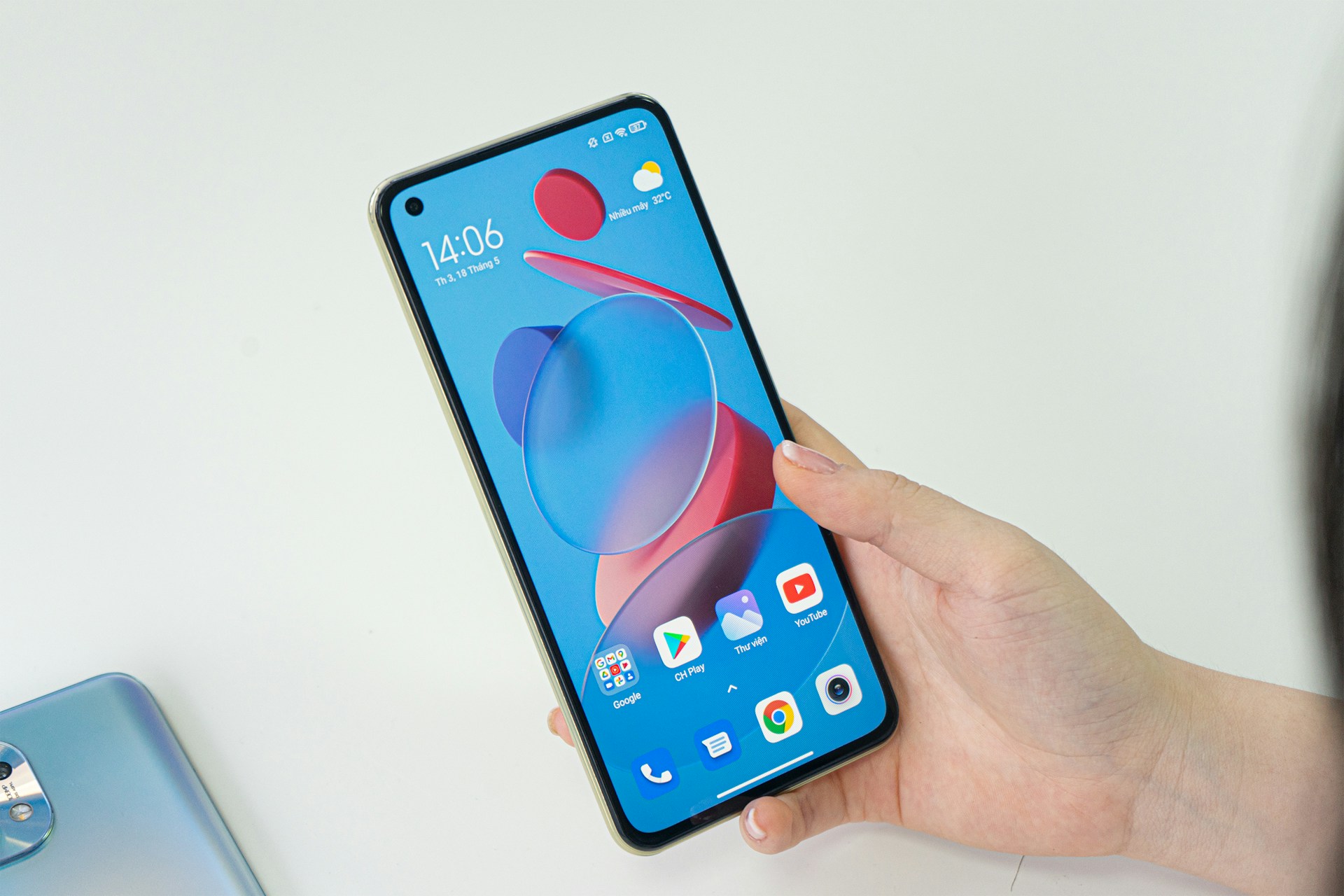
To weather this storm, Xiaomi continues to tweak its smartphone lineup, attempting to capture consumer attention with a mix of high-end specs and aggressive pricing. Looking at their hardware roadmap tells an interesting story of shifting priorities. Take a look at the older Xiaomi 14 Pro, which hit the market in November 2023 with an MSRP of 650 euros for the 12GB/256GB model, versus the recently released Xiaomi 14T from September 2024.
Both devices rock a 6.7-inch footprint with an IP68-rated glass back, but the company clearly re-evaluated its display tech. The older Pro model boasts a sharper 3200×1440 AMOLED screen at 120Hz, hitting 3000 nits of brightness with Dolby Vision support. Meanwhile, the newer 14T trades some resolution for speed and blinding brightness, featuring a 2712×1220 display that pushes a 144Hz refresh rate and a massive 4000 nits of peak brightness. The 14T is also notably lighter at 6.81 ounces compared to the Pro’s heavier 7.87-ounce build.
Under the Hood: Power and Battery
The internal components show a stark pivot in processing partnerships. The 14 Pro relies on Qualcomm’s beefy 4nm Snapdragon 8 Gen 3 chip paired with the Adreno 750 GPU. By contrast, the 14T opted for the Mediatek Dimensity 8300 Ultra. According to PhoneArena’s benchmarking, that Mediatek chip holds its own, scoring 1456 on GeekBench 6 single-core and 4385 on multi-core tests, alongside a 3007 on 3D Mark High. Both models come equipped with a baseline 12GB of RAM and 256GB of non-expandable UFS 4.0 storage running on Android 14, though the 14T scales up to a 16GB/512GB tier.
Battery strategy has evolved as well. The 14 Pro packs a 4880 mAh cell with incredibly fast 120W wired charging, plus 50W wireless and reverse wireless support. The 14T bumps the overall capacity up to an even 5000 mAh but dials the wired charging speed back to 67W, ditching wireless charging entirely. However, that larger battery pays off in stamina. Testing estimates show the 14T delivering over 18 hours of browsing and nearly 10 hours of gaming on a single charge.
The Camera Compromise
Photography remains a major battleground. Both devices feature a triple-camera setup, but the optics diverge. The 14 Pro goes all out with a trio of 50MP sensors: a variable F4.0/F1.4 main shooter with laser autofocus, an ultra-wide, and a 3.2x optical telephoto lens, fully capable of shooting 8K video at 24 fps and 1080p at a blistering 960 fps.
The newer 14T scales this back slightly to maintain margins. It retains a 50MP main sensor with a fixed F1.7 aperture, swaps the ultra-wide for a 12MP lens, and features a 50MP telephoto capped at 2.0x optical zoom. Video recording on the 14T tops out at 4K 60 fps. Both devices sensibly keep the trusty 32MP front-facing camera for 4K selfie videos.
The Long Game
Ultimately, churning out solid iterations like the 14T and pumping money into share repurchases might project confidence, but Wall Street knows these buybacks are an artificial crutch. To truly silence the skeptics and mount a real comeback toward that elusive 4.90 euro 200-day moving average, Xiaomi has to prove it can hold the line. Stabilizing its market share in the fiercely competitive Chinese arena is the only way to build a real fundamental foundation. With fresh market analyses dropping right now on April 1st, investors are left weighing the hard data: is it time to buy the dip, or is it time to cash out before Huawei takes even more ground?